

In 2011, Elena Bermukanova and her business partner stood in a corridor at Moscow’s Radisson Ukraina hotel. Representatives of the Swiss bank Swissquote were waiting in the lobby at the far end. They had prepared for the meeting, but with only about 200 metres left to walk, Elena’s knees began to shake.
Behind her were her first earnings, a job at a brokerage firm and the loss of a client’s money — an experience that almost made her leave the investment industry for good. Instead, Elena brought together a group of like-minded colleagues. For almost 3 years, they searched for an investment product they could offer their circle of investors. Just 2 of them made it as far as the negotiations with Swiss banks.
Through Elena Bermukanova’s personal story and the journey of the iPO COMPANY team, we explore how a small consultancy in a semi-basement office in Blagoveshchensk laid the foundations for iPO COMMUNITY, an international investment community with more than 55,000 members in 55 countries.
“I wanted to decide for myself how I would live”
— Elena, did anyone in your family run a business or invest?
— No. I grew up in an educated family, but we weren’t wealthy. My mother ran 2 clothing factories, and my father was a senior economist at a factory.
Perestroika began when I was 3. Both my parents lost their jobs. There were times when we didn’t have enough money for food or clothes.
I know what financial hardship is from experience. I wanted a different life from a very early age. I wanted to shape my own future and be able to take care of myself and the people close to me.
My parents gave me a very important foundation: an education and an outlook on life. But I had to build my own financial base and professional network.
— Where did you start?
— With work. At 17, I sold men’s suits at an open-air market. Then I spent 3 years working at one of the most expensive restaurants in Novosibirsk. I was also studying at university, so my degree took 7 years rather than 5.
I tried a small business of my own, too: making clothes to order. My grandmother helped with the patterns. The clothes turned out well, and people bought them. But I soon realised that all my income depended on the hours I worked. While I was working, I earned money. If I stopped, the income stopped.
I could see that trading my time for money was a dead end. Over time, I wanted to build a different system, with capital that could work for me too.
20 minutes on the metro
— But you didn’t go straight into investing. Did you ever feel you had spent several years on the wrong path?
— No, I don’t think that time was wasted.
I spent 3 years as a manager at an exclusive restaurant in Novosibirsk. The wealthiest people in the city came there. The restaurant also specialised in serving high-profile visitors to the city: representatives of the Russian government and other governments, celebrities and owners of major businesses.
The restaurant’s owner, Denis Ivanov, is very good at building relationships. Every day, I watched him talk to guests, introduce people and stay in touch. Gradually, I began to learn that skill myself.
I’m very grateful to him for those years. I learned a great deal from him: both how to build connections and how to run a business without compromising on standards. After working with him, getting everything right became important to me. Everything had to be just so.
I also saw how the guests built relationships with one another. In a restaurant, you can see it all happening. People talk and tell their stories: how they started out, how they earned their money and how they built their wealth.
I was interested in their relationship with money. How did they talk about it? What did they focus on? What questions did they ask one another? What were their values? What really mattered to them?
Staff in places like that hear everything. Some put what they hear to use. Others let it go in one ear and out the other: finish the shift, leave and forget it all. For me, the restaurant became a “school”.
At the time, I thought I would make my career in the restaurant business. I was a manager, overseeing service standards and organising the staff’s work. But I ended up in a completely different field. And the restaurant gave me experience that I would later need there.
By the time I entered the investment industry, that way of communicating, that understanding of these investors’ values and their relationship with money, was already wired into my brain, into my DNA. Those 3 years of hearing conversations like that every day had trained my ear and my eye. I didn’t have to make a special effort to speak their language when we talked about large sums of money.
— How did you end up at a brokerage firm in the first place?
— By chance. I had worked very hard in the restaurant business and eventually became seriously burnt out. I couldn’t carry on in that field, so I started looking for a new direction.
I wanted work with plenty of scope to earn more, where the results depended on my own efforts. I considered 2 areas: direct sales and investments. That’s how I joined a brokerage firm as a trainee.
When I arrived, I literally fell in love with the place. I was really fired up about investing.
So much so that in my first few months there, I applied to university for a second degree, in Finance and Credit. I wanted a professional grounding in the field.
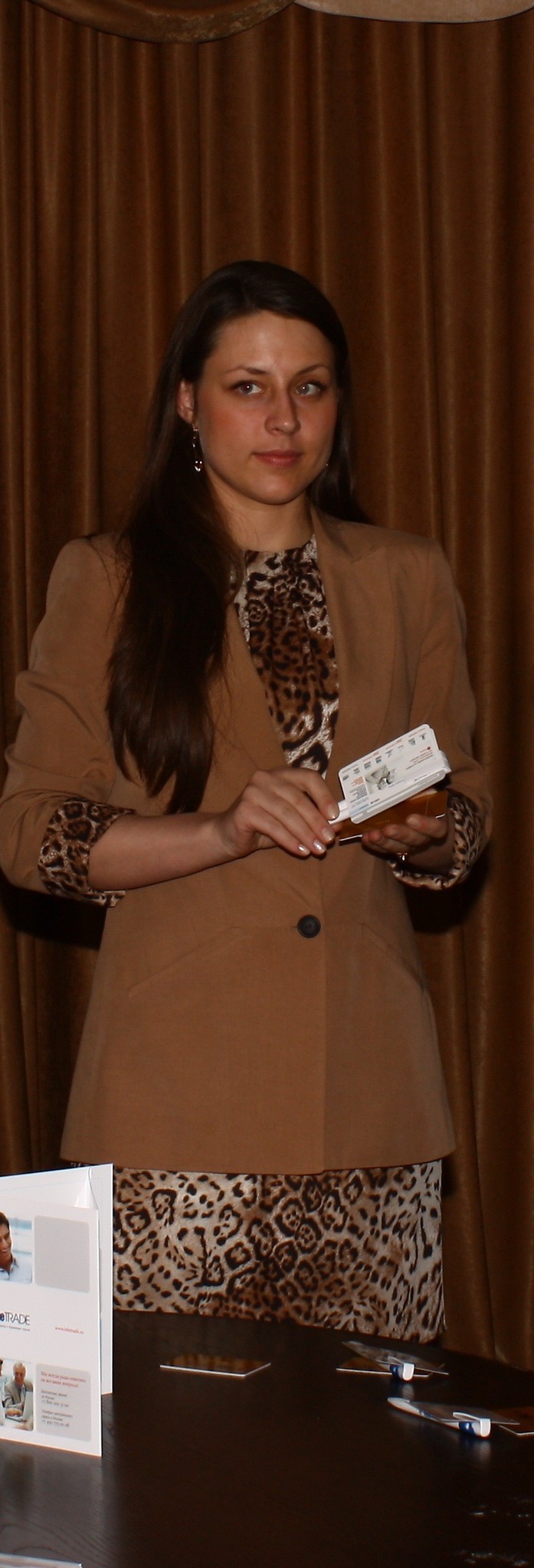
— How easy was it for you to find your feet in an unfamiliar field?
— Back then, I knew absolutely nothing about investing. I had neither specialist training nor any experience. I started as a trainee and had to learn as I went.
I worked without pay for the first 3 months. The rule was: if you don’t meet your target, you don’t get a base salary.
But I understood what I could learn. My manager was one of the best in the network. I watched how he talked to clients, explained complicated things and made decisions. I wanted to understand how he thought and why he was successful.
So every day after work, I deliberately took the metro in his direction, even though I needed to go the other way (laughs). Just for another 20 minutes of conversation. He would carry on talking, and I would listen.
I understood the value of that experience. You can spend a salary. But what you’ve learned and what you can do for yourself stays with you.
Later, at 23, I earned my first million roubles as an employee. So those first months were an investment for me: in myself and in my future capital.
— Once you had that kind of money, did you already know where to invest it?
— That was when the question became really important.
When you have no savings, investing can seem remote. Once you have money of your own, you start looking much more closely: where will it be held, how does the product work and what generates the return?
I wanted to find quality investment opportunities. But the idea of starting a company had come even earlier, practically in my first year at the brokerage firm.
The night that forced a choice
— What happened then?
— Right at the start of my career, an investor came to meet me. We had a really good conversation; we just clicked. She suggested that I manage her money myself.
I went to my manager and asked whether I could do that. He said: yes, of course, go ahead.
I took it on. And lost that money very quickly.
— You had gone to your manager for advice. How did you discuss it with him afterwards?
— While I was doing it, I began looking more closely at the forex brokerage model we were working with in Russia and the CIS at the time. I read the documents and studied the legislation.
And I found that, in this model, the broker makes money when the client loses. Essentially, the client trades against the company: it pays out whatever the client wins and receives whatever the client loses. That creates a serious conflict of interest.
It really upset me. If a company’s business is built on its clients’ losses, our interests are fundamentally at odds.
I went to my boss and asked him outright: is that how it works? He confirmed it. And said: “That’s how the market works all over the world.”
That was when I felt really let down. Someone I trusted, my manager and, in effect, my mentor, knew perfectly well how little experience I had. Yet he had encouraged me to take on someone else’s money.
I had a very difficult night after that loss. I thought: that’s it, I don’t want to do this anymore. What a ruthless industry, if even the person you’re learning from and trusting can put you in that position.
It was a very serious red flag for me. Afterwards, I moved to another office of the company, and we stopped working together.
But I’m still grateful to him for the experience and skills I gained at the start of my investment career, including in attracting investment. A negative experience is still experience. That situation made me think hard about how I wanted to work with investors and my own team.
— And how did you resolve things with the client?
— We had signed an agreement to share the risks 50/50. I repaid her half of the amount lost.
Then I had to decide what to do with my life. Leave the industry altogether and put it behind me like a bad dream. Or try to change something.
But that phrase, “that’s how the market works all over the world”, kept bothering me. Logically, I knew it couldn’t work that way everywhere.
This was in 2008–2009. A government study found that fewer than 5% of Russians knew basic financial concepts. Yet there were countries where families had spent years building wealth through investments and passing that knowledge on to their children.
We all know that children in Dubai have a brokerage account opened for them at birth. In American films, practically every family has its own broker. Switzerland has a strong banking system and an investment culture. We were already hearing about all of this.
So I knew the market couldn’t work all over the world in the way my manager had described. There had to be other approaches.
Gradually, I came to see that he was explaining the system he worked in himself. But that didn’t mean there wasn’t another system.
And at some point, a thought crossed my mind: I can leave now. But if I leave, nothing here will change.
I went to my colleagues and told them what had happened and the conclusions I had reached. It turned out that many of them had also been questioning the ethics of what was going on. That brought together a group of 5–6 like-minded people.
— Did you already know what you needed to create?
— We knew what we wanted to find: a quality investment product for Russia and the CIS. We still had to work out how to get there.
We started in early 2009. And you have to understand the circumstances. We were young, without much experience, and could mainly draw on what we saw around us in Russia.
Good information was very hard to find. There wasn’t much in Russian. We also had to figure out how to find the right people and solutions in English. There was no ChatGPT you could simply ask. The internet existed, but using it to reach the right organisation and work out whom you could trust was a different matter entirely.
For us, it was a kind of information lockdown. You know the solution is out there somewhere, but you don’t even know where to begin looking.
We spent almost 3 years searching and preparing. We studied the infrastructure, gathered information and contacted specialists through my professional network and those of my colleagues.
Of course, nobody was paying us for that work. We did it on our own initiative. By the time we opened the company, just 2 people from the original group were left.
But I never forgot that first experience. Later, I introduced a ban on trading for my own employees. I knew what could happen when someone without enough experience took on something they weren’t ready for.
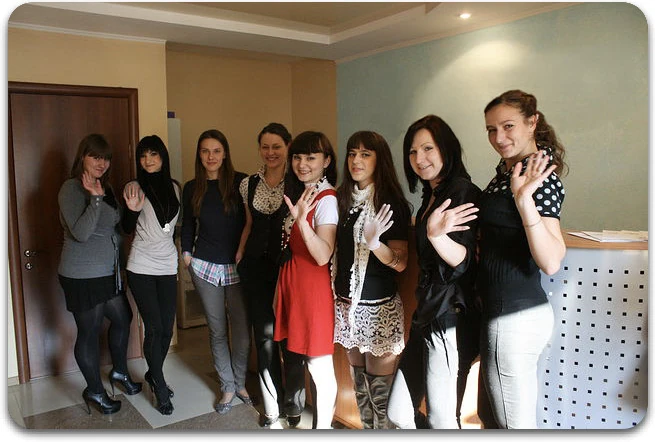
200 metres to the meeting
— Why did you eventually look for a partner in Switzerland?
— Information was scarce, so we needed something solid to rely on. A financial system, legislation and regulatory requirements we could understand. We were looking for a country where conflicts of interest between investors and companies were addressed at state and regulatory level.
At the time, Switzerland was the clearest option for us.
We began looking for a brokerage firm and found that, from 2008, Swiss forex brokers had to obtain a banking licence or stop that activity. That led us to Swiss banks offering brokerage services, including Swissquote, which already had a banking licence.
On the one hand, the banking infrastructure gave us more confidence in the direction we had chosen. On the other, can you imagine what a challenge that was for us?
We were very young. And we had to sit down for serious negotiations with representatives of major Swiss banks.
— How did you arrange the meeting?
— Through preparation, professional contacts and communication.
The international Forex Expo was taking place in Moscow. Banks and brokers working in investments came there every year. We had already made preliminary arrangements to meet 2 Swiss banks.
The exhibition took place on 19 November 2011 at Moscow’s Radisson Ukraina hotel, now the Radisson Collection Hotel, Moscow. And there we were. Our first meeting was with representatives of the Swiss bank Swissquote.
My partner Alexey and I were standing in front of a corridor about 200 metres long. I was 25, and Alexey was 24 (laughs). At the far end, in the lobby, the bank’s representatives were waiting for us.
While we were preparing, the fear had been an abstract idea. Now we actually had to walk over and talk. That was when my knees really started shaking.
Our knees were shaking, but we went.
— What was the hardest part of the conversation itself?
— The surprising thing was that it went much more easily than I had imagined.
On the other side of that corridor were people just like us. Real people. They wanted to understand who we were, what we were offering and how we could help one another.
We wanted a quality platform for our investors. The bank was interested in expanding in our market. Our interests aligned.
And we already had something to show. By then, I had become a director responsible for several regions at the brokerage firm, overseeing more than 200 offices across Siberia and the Russian Far East, in 2 federal districts.
I presented my own and my team’s results in attracting investment and described the circle of investors we had built. It became clear that we could be useful to one another. And the conversation flowed naturally. As if we’d known each other for years.
It was at that exhibition that we signed a preliminary agreement with Swissquote. In May 2012, after completing the necessary procedures, we signed the full agreement. That was the start of a partnership that lasted 12 years.
That’s why I still remember that corridor. Before a meeting, the distance between you can seem impossible to cross. But at some point, you have to walk down it and start talking.
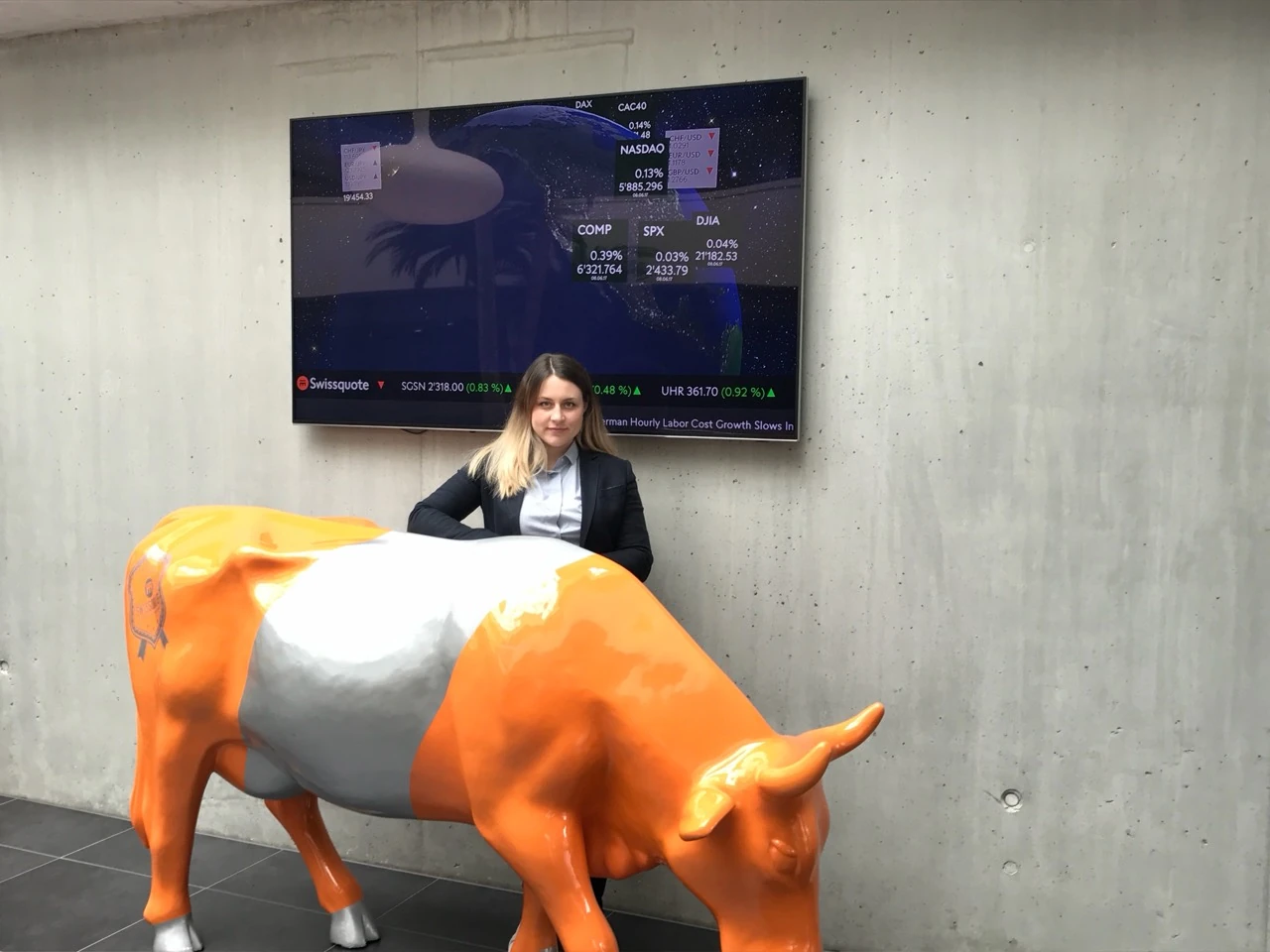
Access to closed hedge fund strategies
— You had an agreement with the bank. What did you do next?
— We looked for a solution for someone who wanted to invest but didn’t yet know how to operate in the financial markets.
From my earlier experience, I already knew that a company didn’t have to deliberately “wipe someone out”. In my experience, when an inexperienced investor starts trading independently, sooner or later — sooner rather than later — they lose their capital. In 18 years, I have never seen an investor without experience earn consistently from trading on their own. To us, that meant a beginner couldn’t be left alone with the market.
Simply giving someone the chance to open an account at a Swiss bank wasn’t enough. We needed to find professional strategies and support that would help them start investing.
We had approached a Swiss bank so that we could make money together. And it was our partnership with Swissquote that gave us a route to closed hedge funds.
Our colleagues at the bank helped select strategies suited to our needs and arrange meetings with the funds behind them. They recommended us to the funds and introduced us to professional teams we could explore working with.
We began negotiations with 12 funds. We were able to move forward with 8. The other 4 declined at the time. Their answer was essentially: you’re from Russia, you’re too young, and we’re not ready to work with you yet.
We started building partnerships with the others.
Then came the next challenge. Some closed hedge funds require at least $100 million to invest directly. We were working with funds like these to access their strategies. And even having the money doesn’t automatically get you in.
Now imagine someone with an ordinary life. They work hard, earn well, perhaps run a small business and put money aside. But $100 million is beyond even what they can imagine. Let alone an amount they could actually raise.
That’s who we wanted to find a solution for. Not least because we were in the same position ourselves. We were looking for ourselves, our friends and our circle of investors.
— What made it possible?
— At that point, we didn’t have a single investor with $100 million or more. But the combined capital of our circle of investors made it possible to discuss that kind of arrangement.
The technical solution was a Multi-Account Manager system, or MAM. Several separate brokerage accounts are connected to one strategy through a technical pool. It isn’t a shared pot of money: the funds remain in each investor’s personal account, while the system allocates the strategy’s trades across the connected accounts.
We used MAM, not copy trading. Banks and brokers in various countries use these systems. It was essential to us that investors didn’t have to transfer their capital to the company or to other members of the pool.
The organisational solution was an “umbrella” arrangement: the company, and later the community, handles all communication with the funds.
That was the format we agreed on from the start. The funds don’t have to deal separately with enquiries from every member. Members receive support through us.
That is why the funds’ names are not disclosed publicly. This arrangement helps preserve both our agreements and the opportunity for access itself.
Meanwhile, members’ investment capital stays in their personal brokerage accounts. They connect to their chosen strategies and can see trades, positions and financial results in the app.
iPO COMPANY arranges access to closed hedge funds’ strategies. Investors don’t have to arrange all those meetings and build all those connections for themselves, as we did.
For me, that is democratising investment opportunities: something that used to be beyond your reach becomes available to you through the community.
How investors became a community
— But you started with a company and a circle of investors. When did it become a community?
— Initially, I worked with the circle I had built by then. Friends, acquaintances and the investors I worked with most closely myself. It was a small circle of investors who knew me.
Then 2015 became the turning point.
During the banking crisis in Russia, the flow of new investors stopped. We asked the company’s existing clients to recommend us to people they knew.
And that same year, we grew 3 times over.
Clients introduced us to friends, relatives and colleagues. They could see the value of what we did. Above all, they could see the income they were receiving themselves.
We helped them build capital, and they helped us grow. We were genuinely helping one another. Real synergy.
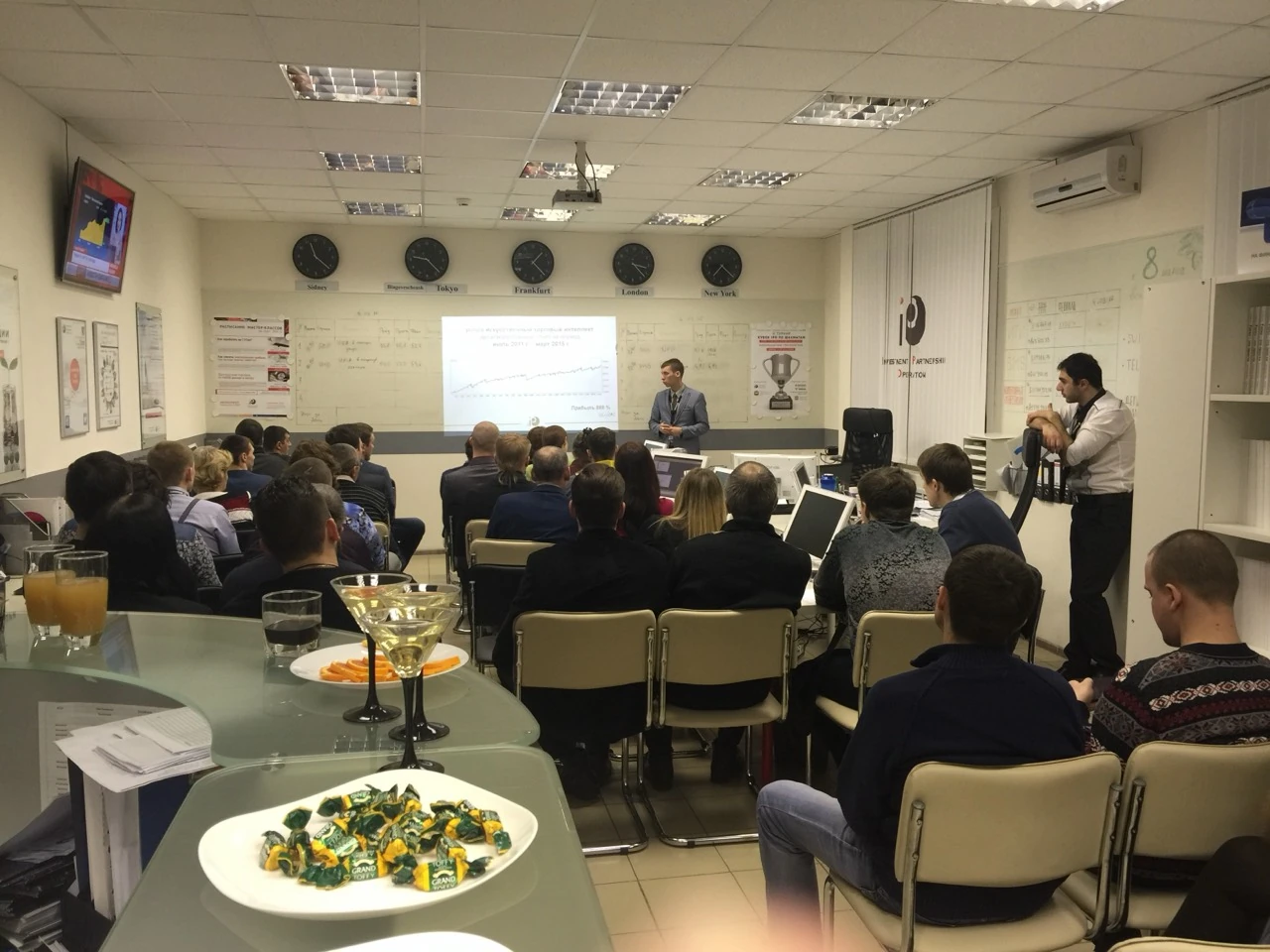
— Why did the iPO COMMUNITY brand only appear in 2022?
— Because the community took shape in real life first.
iPO COMPANY had been operating since 2011 as a consultancy helping investors access quality investment solutions and fund strategies. The community gradually grew around that work.
Our investors came to events, met, talked and shared experiences. Relationships developed that went far beyond their first introduction to the investment programme.
By 2022, we had held more than 35 major in-person events in different countries. And it became clear that it was time to give that format a brand of its own.
That’s how iPO COMMUNITY came about.
Today, it has more than 55,000 members in 55 countries. And the members themselves keep building it through their experience, involvement, connections and the way they treat one another.
You can’t simply write the word “community” and create one. Investors are brought together by what actually happens between them.
Member gatherings
What the next member can build on
— Your personal search has grown into an international community. What does someone joining you today receive?
— The chance to draw on what we spent years building.
When we started, we had to find the infrastructure, reach people, negotiate and work out things we hadn’t understood before.
Today, a new member can meet existing investors, study the strategies’ published results and ask specialists questions. Work out which way of participating suits them.
There are investors around them with different levels of experience. Some are just starting to build capital, some have invested for years, and others are growing businesses. You can talk to them, discuss your questions and learn how they navigated similar stages.
That’s enormously valuable to me. I know from experience how much even 20 minutes with someone you can learn from can give you.
— What if someone just wants to understand things and isn’t ready to make investment decisions yet?
— Then start by getting to know us.
Look at how the investment programme works on the website. Explore the strategies’ track records, terms, opportunities and risks. Talk to the specialists.
You can also book a meeting with an existing investor. We launched that programme in 2026.
The investors taking part have personal capital of roughly $10,000–$50,000. They’re generally not millionaires: those investors have different priorities and aren’t always interested in meetings like these. Here, you can talk to someone who has been through the early stages and ask questions: how they started, what worried them, what they encountered and how things work for them now.
They’ll share their own experience. It’s a real conversation where you can ask what matters to you, rather than just watch a polished presentation.
And you should definitely register for an investor account. It is, in effect, a social network for investors. You can meet, talk and share experience there.
Registration also gives a preliminary answer as to whether we can accept someone into the community and which opportunities will be available to them. That includes access to the licensed brokers we work with and to closed hedge funds’ strategies.
We take responsibility for who joins iPO COMMUNITY and screen every prospective member. Investors meet, talk and build relationships within the community. Preserving that environment matters to us.
— What if someone has no capital to invest at all right now?
— They can start by working out how to build it.
The investor account offers a free session with an AI mentor as part of the Investor Roadmap project.
We created this AI mentor together with my own real-life mentor. We built in his perspective, logic and methods. He is a highly skilled mentor who has already helped more than 100 people go from zero to a million dollars in capital.
I have worked with him for many years and have paid millions of dollars for that mentoring. Now, iPO COMMUNITY members and registered users can use an AI tool based on his approach completely free of charge.
The AI mentor’s job is to help you understand your own situation. What are your current income and expenses? What do you already have? Where do you want to get to? What resources could you use to start building capital?
And the mentor looks at the whole picture. You can discuss your career, business development, income, resources and constraints. Your goals don’t have to relate only to capital: they may be career or business goals.
We wanted this tool to recreate the experience of a session with the real-life mentor whose approach AI Mentor is based on. The aim isn’t to reduce the conversation to selling our investment products, but to help you make sense of your situation and work out how to move towards your goals.
Because “I want to be financially free” is still only a wish. Next, you need to understand how much money you actually need, what you can change now and what step to take next.
That conversation forms the basis of a personal roadmap. You get a sequence of steps: how to build savings, how to approach a first investment and how to develop a portfolio after that.
My mentor’s experience is the foundation of the tool. But everyone has their own path, and the outcome depends on their situation and actions.
You can start before you have money to invest. By working out how to put together the money for your first investment.
— What still matters most to you in this whole story?
— When we started, we were looking for a solution for ourselves and our circle. We wanted to understand how to invest, what to rely on and whom to work with.
Over 15 years, the infrastructure changed, the company developed and the community grew. But the core idea stayed the same: to open up investment opportunities that 98% of the world’s people could never reach on their own.
Once, we were the ones looking for answers and finding the courage to walk down that corridor for the first time.
Today, we have years of work behind us, along with those who have travelled part of the way with us. That is what the next member of iPO COMMUNITY can build on.
Editorial team: iPO Journal8 November 2026 · iPO COMPANY
Comments
Top comments first